HIROSHI KARIYA

| FACE SUTRA|顔経 | DOCUMENTS | 8"x8"|

| ARTUS SUTRA |
| MIXED MEDIA INSTALLATION RENDERING | 2021 |

| WORK IN PROGRESS RENDERING |


| FACE SUTRA | 顔種経 |
| PHOTOGRAPH | 1991-1 | INSTALATION RENDERING | 2021 |

| YUCCA VALLEY | PASS |
| INSTALATION RENDERING | WORK IN PROGRESS |

Multi Media Installation Rendering 2021 Sequence Photograph 1/8 48"x36" (122cmx92cm) Image Site: Wyth+N15-Bankers st, Bkln, New York

Multi Media Installation Rendering 2021 Sequence Photograph 2/8 48"x36" (122cmx92cm) Image Site: Wyth+N15-Bankers st, Bkln, New York

Multi Media Installation Rendering 2021 Sequence Photograph 8/8 48"x36" (122cmx92cm) Image Site: Wyth+N15-Bankers st, Bkln, New York
Multi Media Installation Rendering 2021 Sequence Photograph 1/8 48"x36" (122cmx92cm) Image Site: Wyth+N15-Bankers st, Bkln, New York
| WYTH+BANKER WALL MURAL RENDERING | 2021 |

| 20161718 | WYTH MURAL RENDERING | 2020 |

Multi Media Installation Rendering Series Photograph Site: Kent Ave+South 3rd, Bklyn, New York

Multi Media Installation Rendering Series Photograph Site: Kent Ave+South 3rd, Bklyn, New York

Multi Media Installation Rendering Series Photograph Site: Kent Ave+South 3rd, Bklyn, New York
Multi Media Installation Rendering Series Photograph Site: Kent Ave+South 3rd, Bklyn, New York
| 2003-11 | KENT AVE MURAL RENDERING | 2020 |
吾が遠縁の親族達の仮面図書館
Library of My Distant Relatives
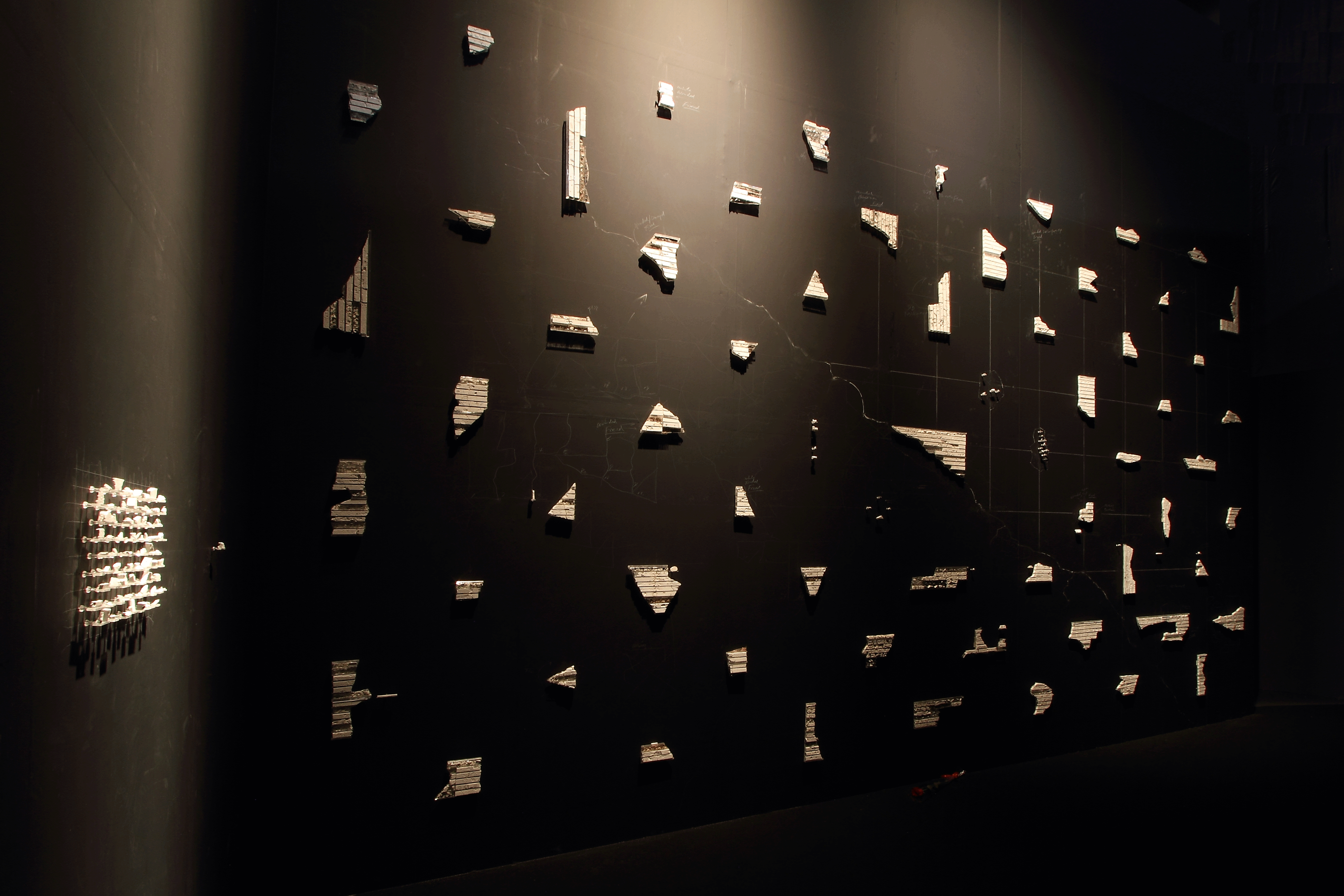
PHOTO: KEI MIYAJIMA
| FOSSIL CHALK | TDW INSTALLATION | TOKYO | 2011 |


| MULTI MEDIA INSTALLATION RENDERING | 2020 |

| MERRY-GO-ROUND | PASS |
Video Pholograpy Rendering
"Wounded Mother And Her Children"
Making Fossil Chalks / The, Sign of The Times 3112011: mixed media, plaster with shredded news articles, chicken bones, studio debris, tone articles, memo paper, scrap metal, plastics, nails, screws, pencil leads, 24 karat gold leaf,...
Tokyo Designer's Week Art Fair, 2011

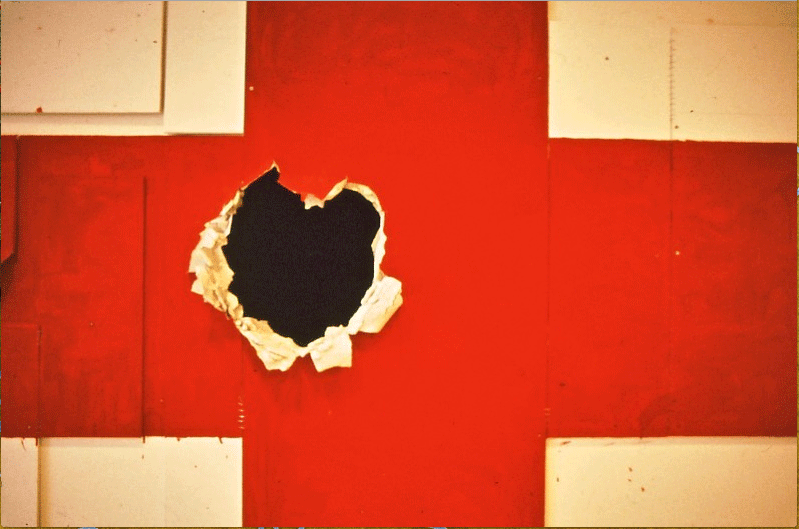
| INSTALLATION | ART TOWER MITO | 1994 |
PHOTO: TAKU SAIKI

PHOTO: TAKU SAIKI
ART TOWER MITO INSTALLATION
Trash And Debris
-ICA Philadelphia 1990, "Sutra", Phil. PA
-Ihara Ludens Gallery 1992, New York
-Sparks Gallery II 1993 "In Memory of 1992"
-Mizuma Art Gallery 1994 "Sign of The Times"
-Mizuma Art Gallery 1995 "Chalkboard Sutra"
-Mizuma Art Gallery 1996 "Emptiness"
-Mizuma Art Gallery 1997 "Parallel Chalkboard"
Kariya's ongoing "the now is" writings on various objects by random picks; shredded page of Bible+Quran+Heart Sutra+NYT, World Atlas, post cards, old snap photos, portfolios, portrait photos, missing child milk crates, memos, drawings, card boards, chicken bones, pork bones, ox bones, receipts, stickers, sea shells, stones, Hudson drifted wood, construction debris, sheet rocks, craft papers, shopping bags, paper bags, duct tapes, sheets, cloths, anonymous photos, found woods, picture frames, napkins, trashed memos, plastics, old records, record tapes, rices, beans, seeds, dried bread, pasta, and millions of others. Exit Art, 1989, ICA Phil, 1990.
359 Canal Studio: former studio of Nam Jun Paik, Ay-O, the place FLUXUS was performed. Dick Higgins studio was downstairs. More

| MIXED MEDIA INSTALLATION RENDERING | 2020 |

| Time Cut-Off Evidence | PHOTOGRAPH | 2018 |

Face Off, NYT Magazine p83, 10/1999

John Baldesari
Ed Ruscha
Howardena Pindell
Vito Acconci
David Wajnarowvicz
Mike & Doug Starn
Damien Hirst
Claes Oldenburg
Joan Mitchell
Andy Warhol
Annette Lemieux
Rosemarie Trockel
Laurie Anderson
Larry Rivers
David Hammons
Elizabeth Payton
Lorna Simpson
Erté
John Currin
Elaine de Kooning
Peter Halley
Futura 2000
Nan Goldin
Robert De Niro Sir
Ann Hamilton
Private Collection | CANADA

Face-Off, NYT Magazine p84, 10/1999

Face Wraps: left: 426, 425, 424, 423, 422, 421, NYT A12, 2/25/2007

CATTELAN Face Off, 1/50 sequence, 4/23/2017, NYT ST6, Vinyl Banner

ICA Phil, 1990


1970's


1980's

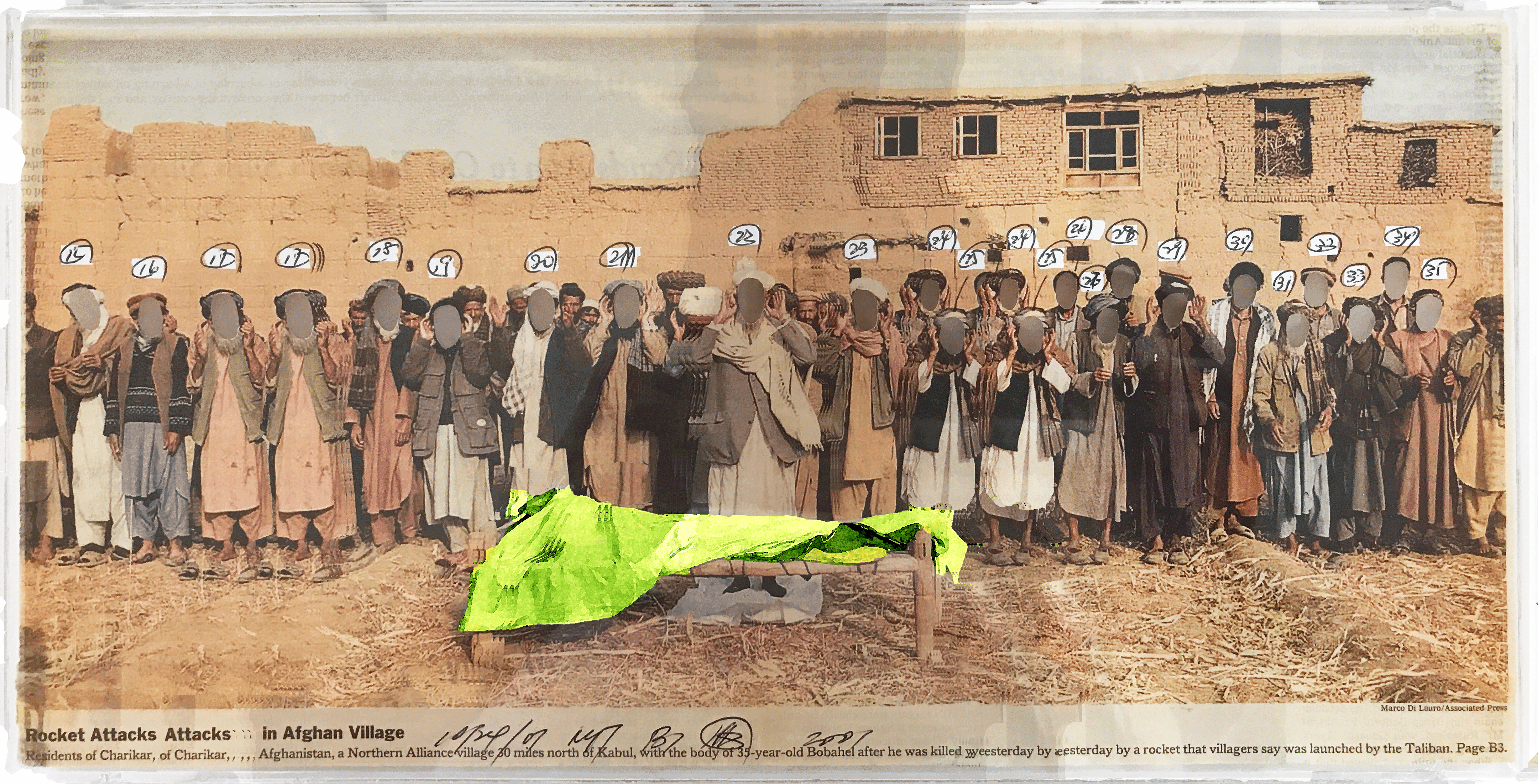
ROCKET ATTACKS ATTACKS ... IN AFGAN VILLAGE
Photo banner, 4'x8', Image:B1 NYTimes 10/24/2001


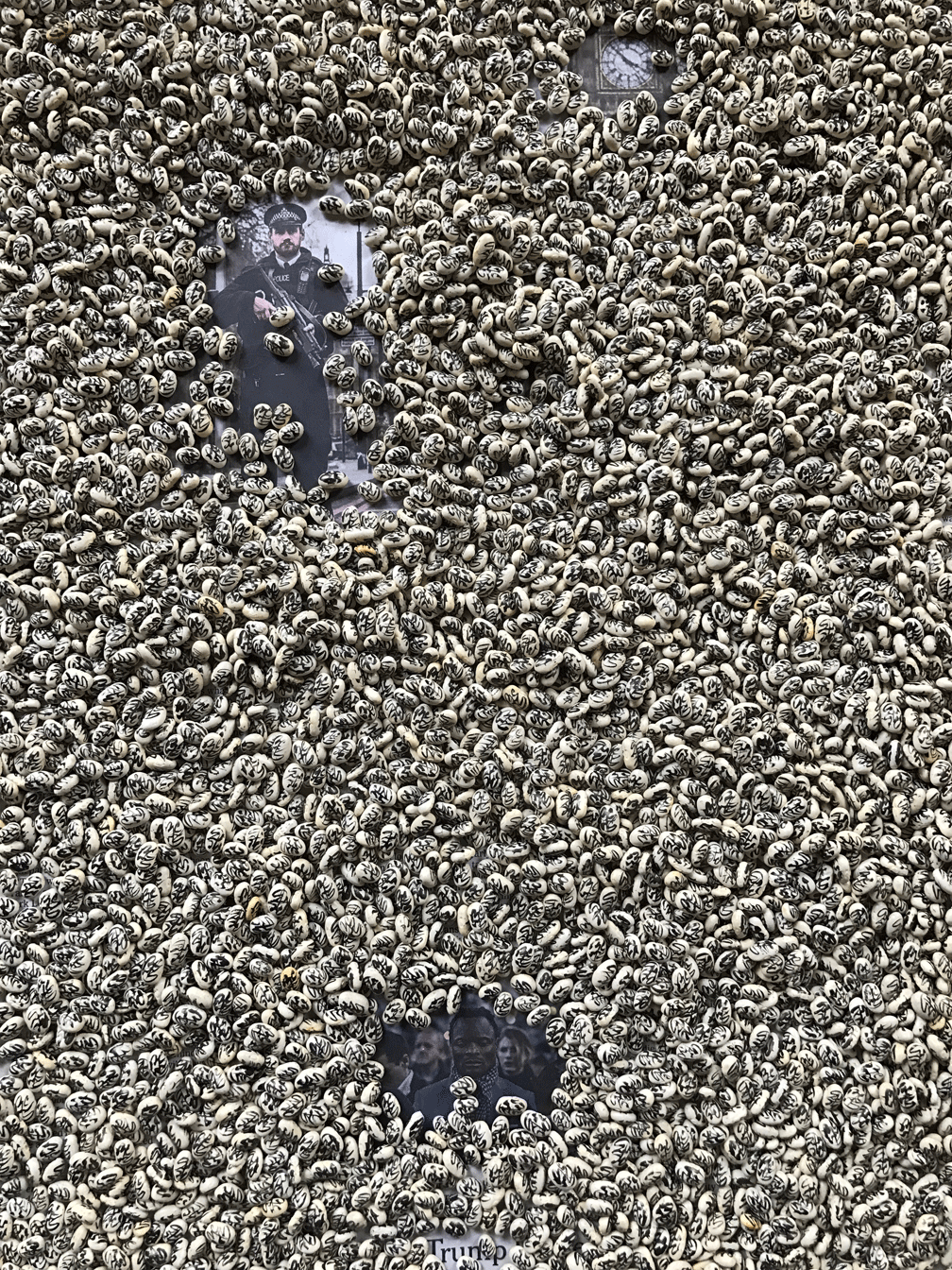

Hiroshi Kariya was born in Japan and moved to the United States in 1977. Since then, he has pioneered a form of *self-archaeological art*, researching concepts of existence, language, and the archetypes of artistic creation. Exploring these archetypes begins with the premise that "first," there is existence; "first," there is language; "first," there is consciousness; "first," there is questioning. The Japanese character "元" (moto; source, origin) can also be read as "to begin," that everything begins from "now." Here, the process of creating a work of art becomes a method, a form, and a realization of the work itself, allowing for the examination of the traces of existence and the representation of linguistic structures. These traces are merely a process of trial and error, an ongoing, unfinished landscape. This representation is the "now," encompassing both the visible and invisible aspects of the world we live in, including the universe. Everything exists simultaneously: "is." Here, Kariya begins to write the three words "the now is." "It" exists simultaneously with all events and things. "The" exists equally with things named as trash, dust, or useless. Everything is an illusion of "now," a single entity. Each of the three words is independent and meaningless on its own; they complement each other's meaning, becoming a trinity: "the now is." We, too, complement each other's meaning in a similar way. Fragments encoded as letters or objects speak as evidence of the simultaneous existence of everything, from amoebas to cosmic debris. Meaning is recognized only through the act of being conscious of this "simultaneity." Division, discrimination, and pretense also present a manifestation of the unified "one" illusion.
Kariya uses news media articles and images as typical examples of virtual information, collectively referring to his works as "news paintings" or "news sculptures." These are evidence of the virtual present in the information society, examples of time code references. At the same time, they are used for archaeological verification in work management, presenting the illusion of classification, analysis, organization, and management.
The work is constant ONGOING "thread" makings. All is from the same source, but with different aspect of life. His early works were exhibited in his solo show at Exit Art, NY in 1989, and following solo exhibition "SUTRA" at ICA Philadelphia, in 1990.→ Sozansky articles
“Sutra” Sanskrit; code, thread, string, book binding string, or a scripture. Sacred code, line, measuring line, sequence, column, grid.
Kariya has exhibited at the New York Armory Show in 2019. MOMA PS1 "Meditation" for the "Sound Show" special project, 1979. Exit Art "Sutra" 1989. ICA Philadelphia "Sutra: One thing in everything: everything in one thing" 1990, "Et Maintenant" ENSBA, Paris, 1998, lectures and exhibitions at sebral organizations, museums, galleries.
概略
刈谷博は日本に生まれ1977年渡米した。以来*自己考古学芸術の形式を開拓、存在概念、言語、作品成立の元型を研究し始める。元型を探るとは「まず」存在があるとせよ、「まず」言語があるとせよ、「まず」意識があるとせよ、「まず」問うことがあるとせよ、と始める。日本語「元」という文字は「はじまる」とも読める、つまり全ては「いま」から始まると思考するのである。ここに作品が出来上がるプロセスの痕跡に存在概念、言語構造の表象の「その」在処を検証する方法、形式、成立の作品化が可能となる。「その」痕跡は試行錯誤のプロセスでしかない、現在進行形の未完の風景である。その表象とは宇宙も含めわれわれが生きる世界の可視、非可視も含む「now」である。一切同時にあること「is」。ここで刈谷は「the now is」三文字を記述し始める。「それ」は事象・万物一切と同時に在る。「the」はゴミ、塵、役に立たないと名称化された事物とも同等に存在する。全てはひとつである「now」のイリュージョンである。三文字それぞれは独立し意味を為さない、お互いが意味を補完し合い「the now is」三位一体と生る。わたしたちも同様にお互いの意味を補完し合う。文字またはオブジェとして符号化された断片は、アミーバから宇宙の屑に至るまで全ての同時存在の証文として発言する。意味はその「同時」を意識する行為によってのみ認識される。分断、差別、見せかけ嘘っぱちも統合「ひとつ」のイリュージョンの意明示を呈示するのである。
刈谷は、ニュース媒体記事とイメージを仮想情報の典型として使用し作品を「報道絵画」または「報道彫刻」と総称する。それらは情報社会の仮想現在の証拠、時間コード参照の範例である。同時に作品管理上の考古学的検証に用いられ分類、分析、整理と管理のイリュージョンを提示する。
主題は糸「スレッド」である。初期作品は、1989年Exit Art, NY、翌1990年にICAフィラデルフィアにて個展「SUTRA」で巡回展示された。
SUTRA→ Sozansky articles
「経」サンスクリット語; 意図、いと、糸、紐、系、本、綴じ紐。
神聖な、コード、符号、暗号、測り定める線、数列、列。
刈谷は「New York Armory Show」2019。「SOUND SHOW」MOMA PS1、1979特別展示。「スートラ」EXITART, 1989。「スートラ」ICA Philadelphia, 1990。「どないやねん」展ENSBA, Paris, 1989, 他各諸団体、公共機関、美術館、画廊など講演、展示。